
Project Scope
Add to your portfolio with more depth by created a research-driven contribution to the design field. It must include an abstract, five chapters to support your abstract and a bibliography to showcase where your research is pulled from.
Inspiration
This thesis was a labor of love and it truly captured something that I have been passionate about for years. Growing up in Oklahoma, my sisters and I always saw the plastic, paper and cardboard littered throughout the streets of Tulsa. As beautiful of a city it was, it was spread thin with trash due to many reasons. With this as a background of our childhood we enjoyed seeking ways to be more sustainable such as re-usable bags, using rags instead of paper towels, and trying our best to remove single-use plastics where possible.
This passion leaked into when I started my journey with Graphic Design as well. When asked to created packaging products in my undergrad, I always navigated toward creating for good. Designing so the "company" we were creating for could produce more sustainable products and projects was what I always enjoyed. It was a good puzzle and I always enjoyed the challenge. Later when starting my masters program, I leaned into this passion even more. My professors not only approved but pushed me to explore combining the world of sustainability and design and by doing so, I was able to create this Thesis that has been downloaded over 350 times (published in October of 2025) all over the world.
Abstract
In a world facing escalating environmental crises, graphic design must evolve from a purely aesthetic practice into a tool for sustainability and social change. As consumerism continues to drive wasteful production and marketing strategies, graphic designers are uniquely positioned to influence eco-conscious decision making through both digital and physical media. However, the widespread adoption of sustainable design remains hindered by a gap in education, industry standards, and implementation strategies. This thesis investigates how graphic designers can actively contribute to sustainability through informed design choices and advocacy. To understand the role of graphic design in promoting environmental responsibility, the following research questions were explored:
1. How can designers implement sustainability in print media?
2. How does sustainable packaging design influence consumer behavior?
3. What marketing strategies best communicate eco-conscious values?
4. How do educational and industry gaps hinder sustainable progress?
5. What role can designers play in advocating for sustainability in the workplace?
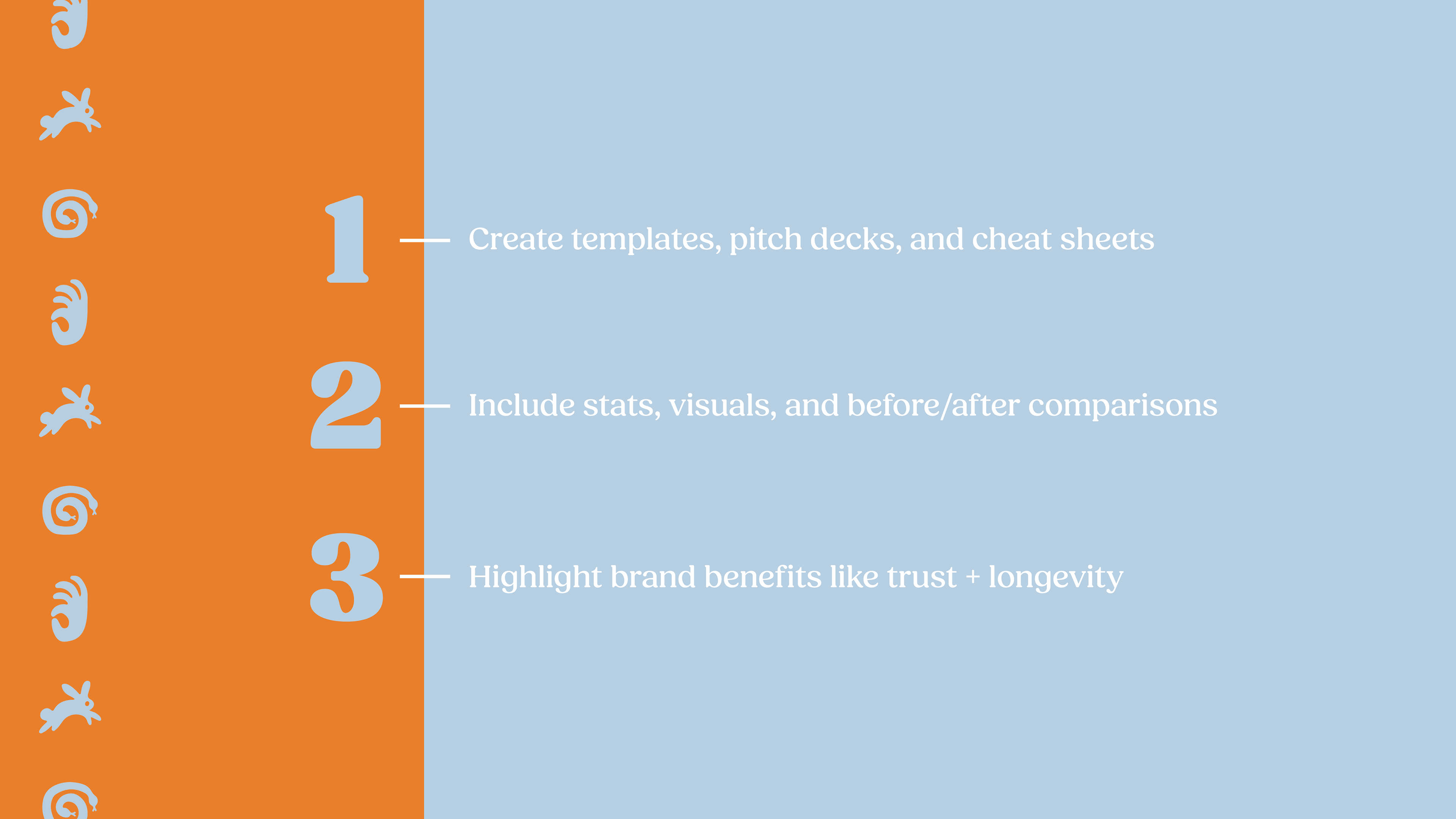
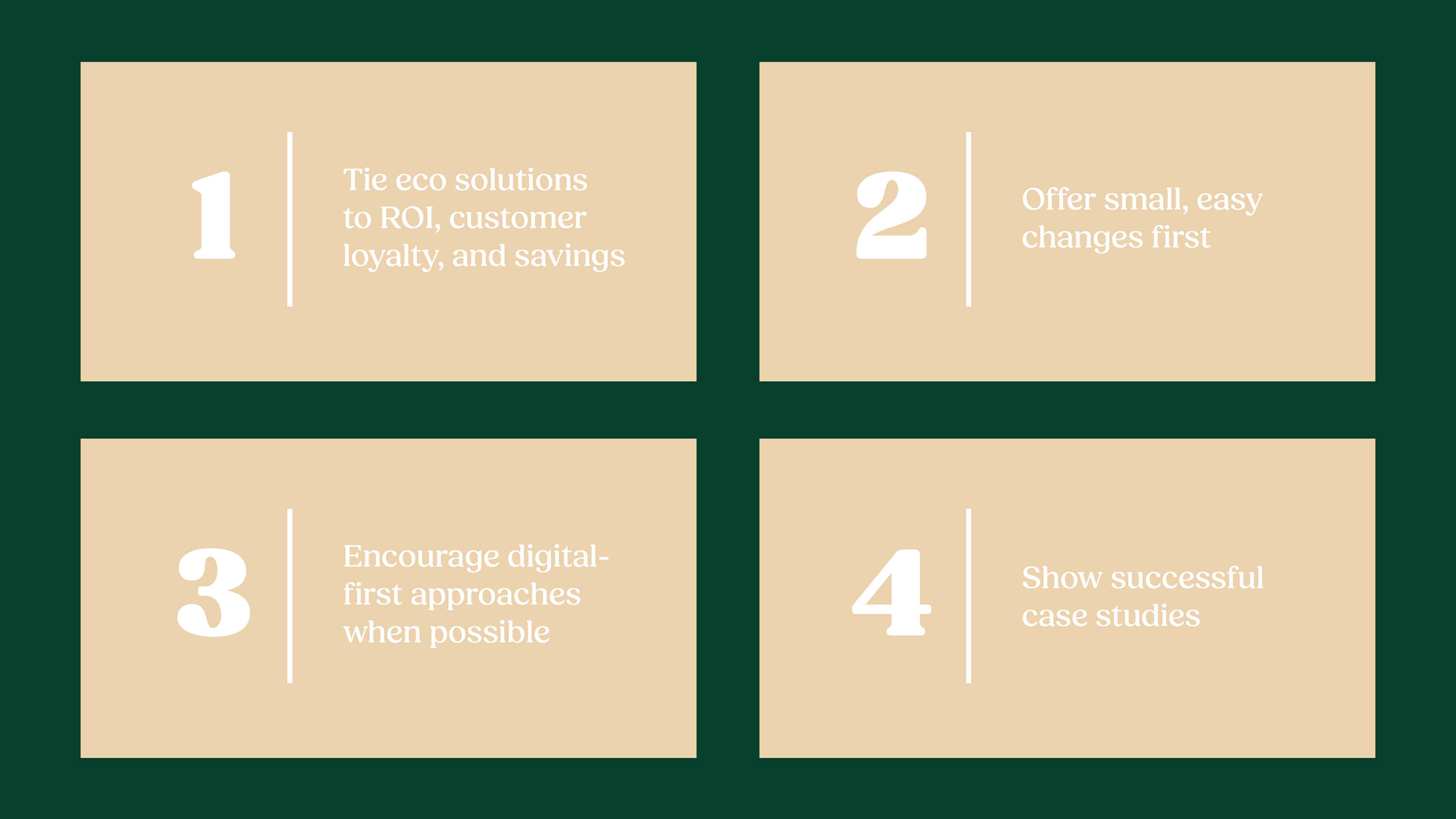
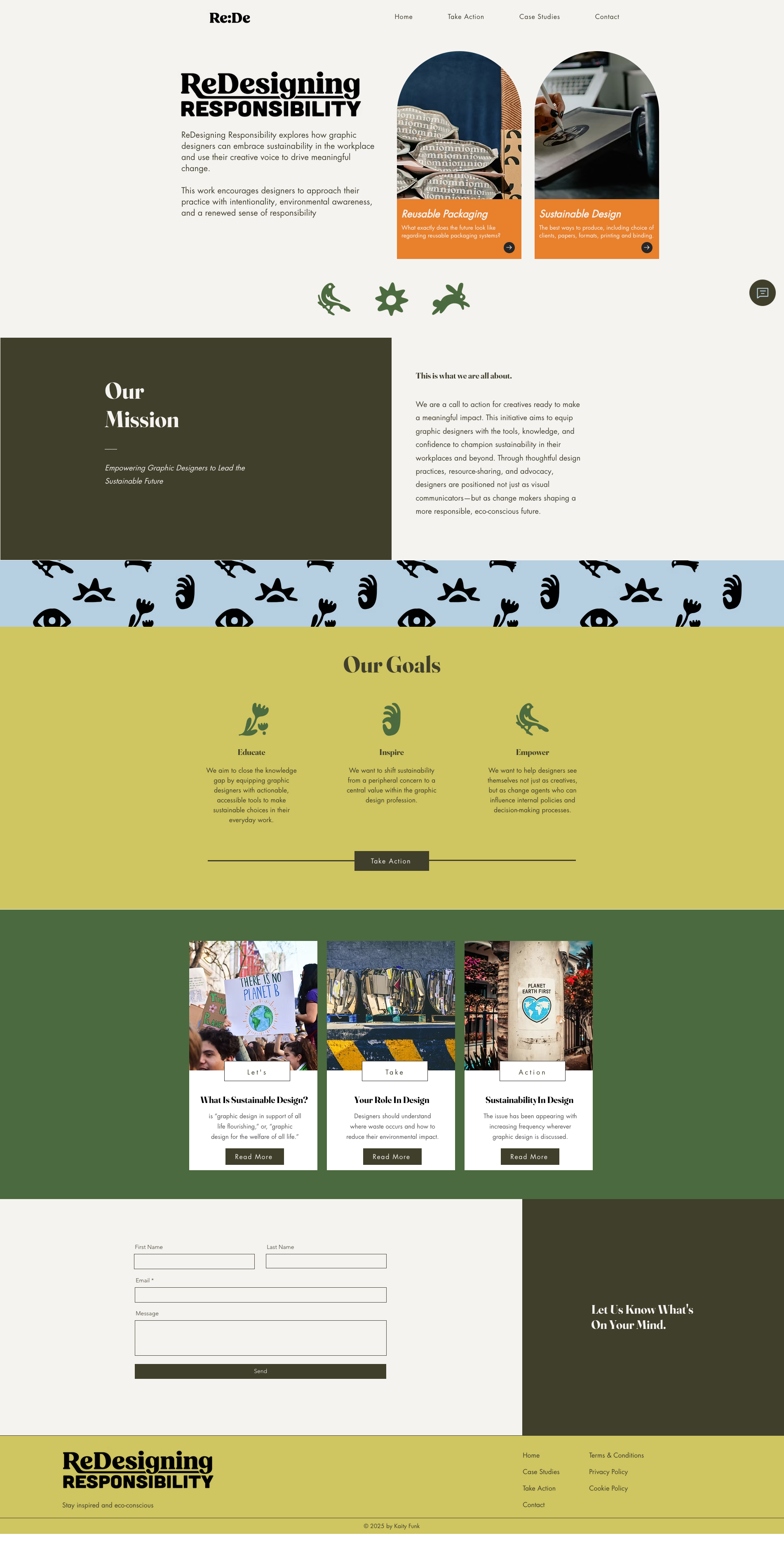
Through a comprehensive literature review, case studies (such as Patagonia, Nespresso, and Lush), and analysis of sustainable branding and packaging strategies, this thesis reveals the urgent need for eco-friendly practices within the design industry. The culmination of this research is a conceptual design solution—a branded visual campaign aimed at equipping designers, students, and businesses with the tools to integrate sustainability into their creative processes. By leveraging digital platforms, interactive graphics, and educational content, the visual deliverable empowers the design community to reduce environmental impact and adopt sustainable practices across industries.
View my full Master's Thesis to understand the reseArch and reasoning behind the deliverables that I created.
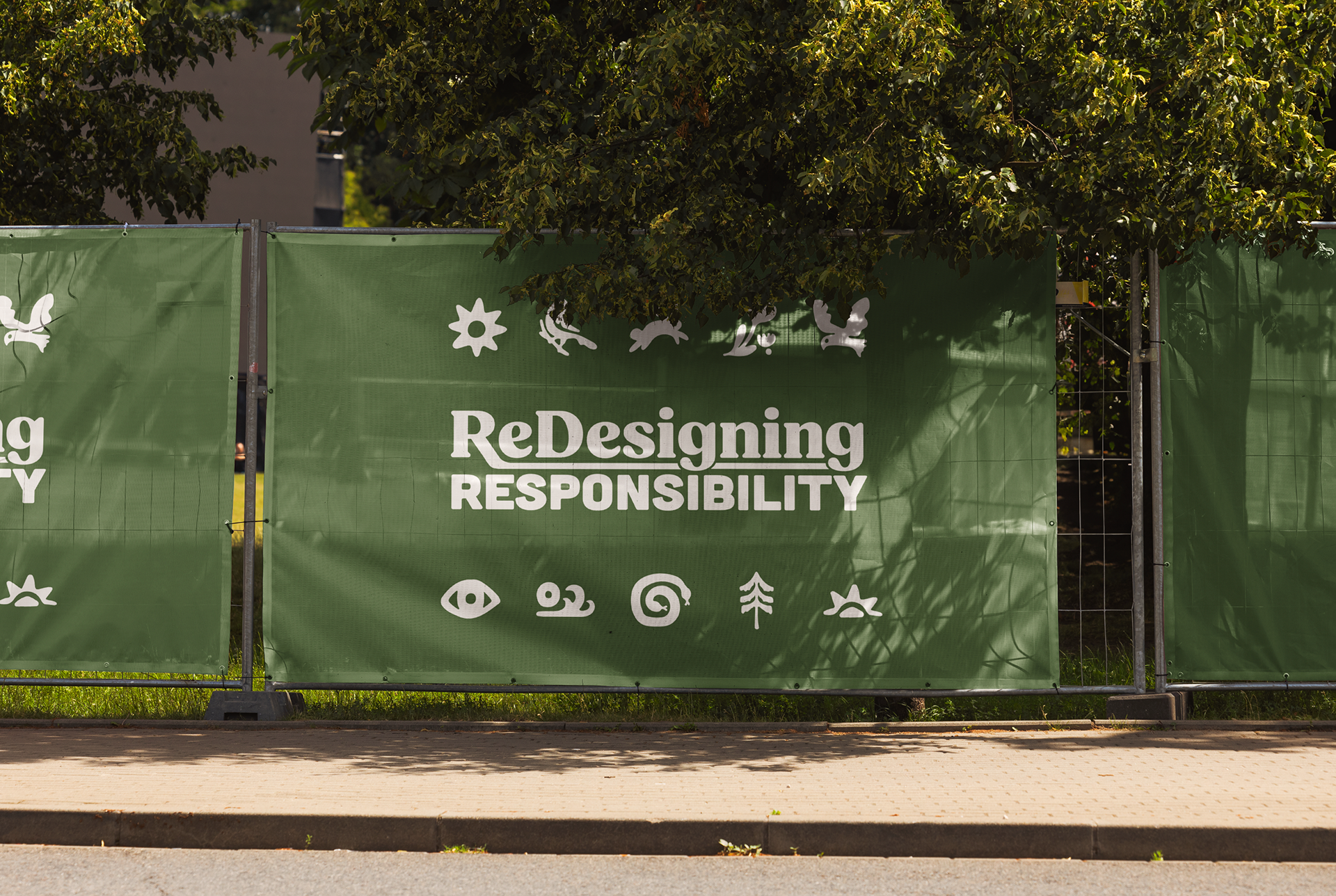
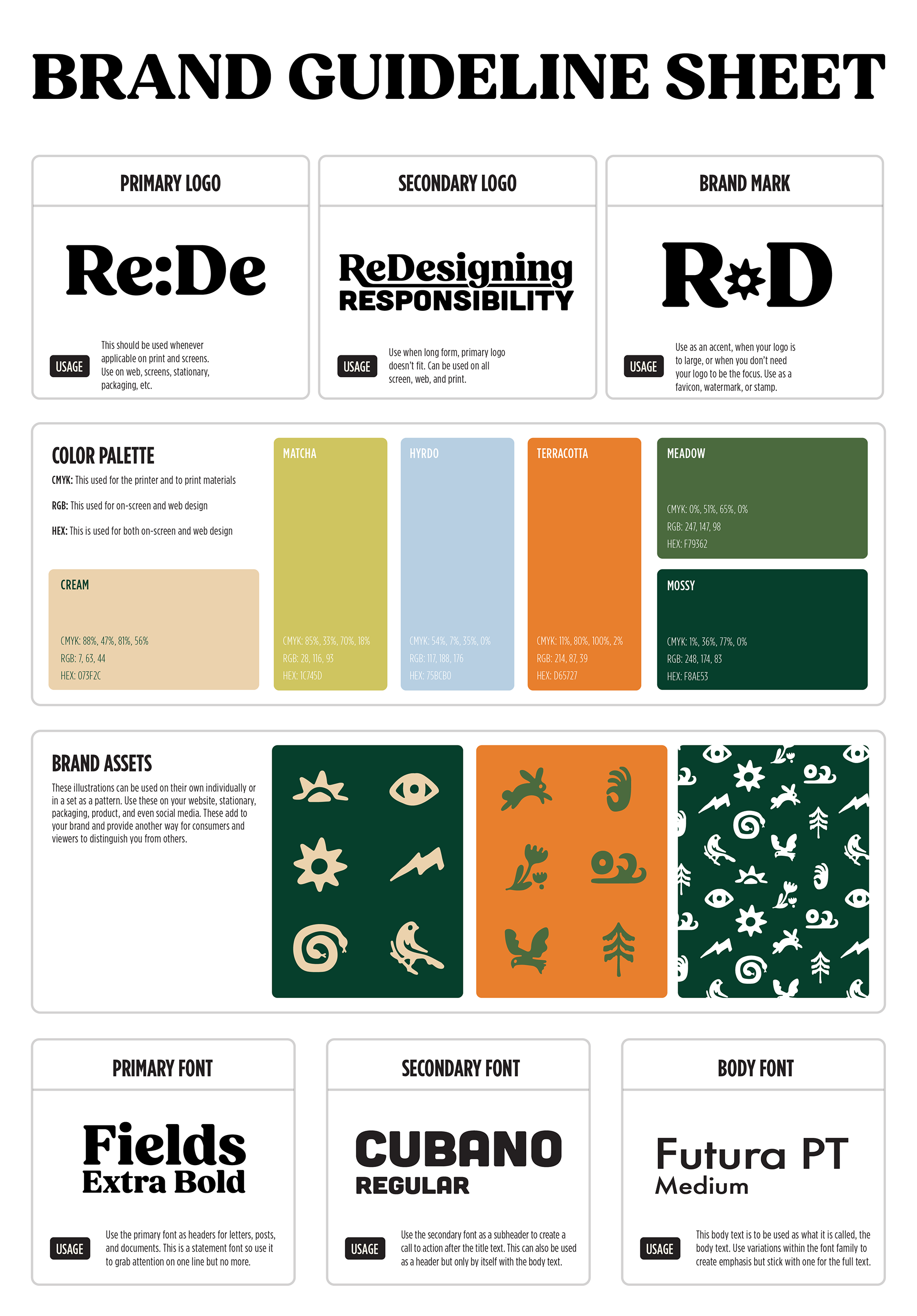
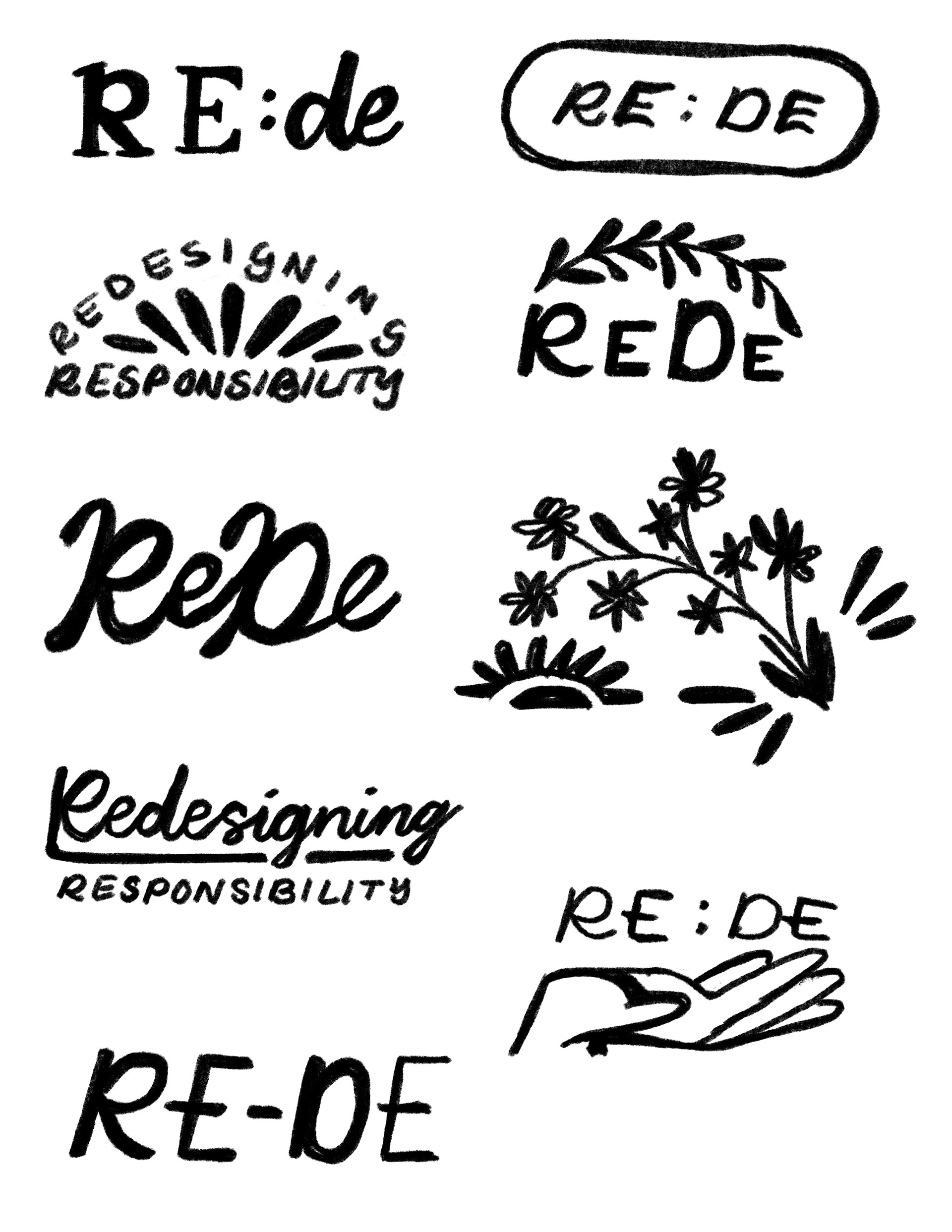
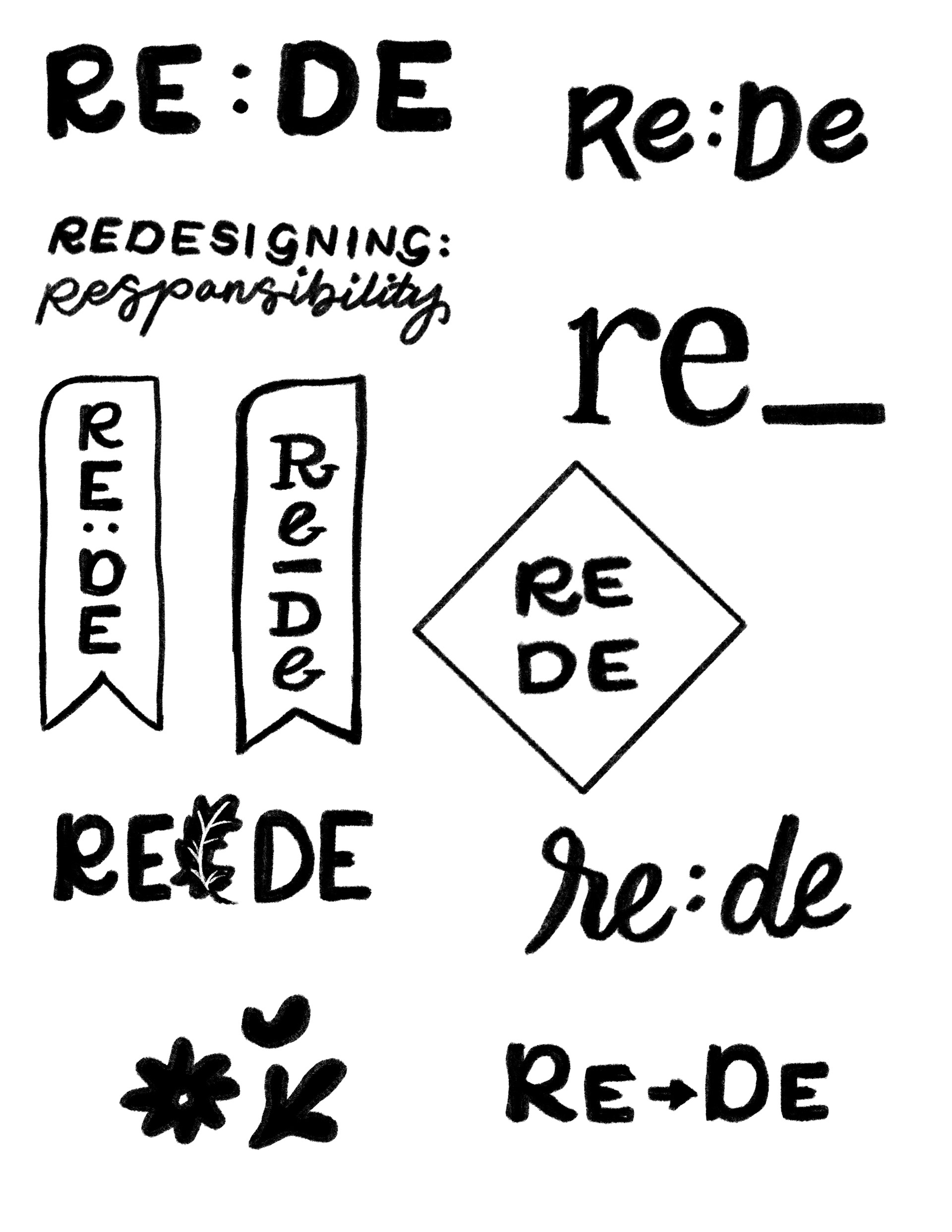
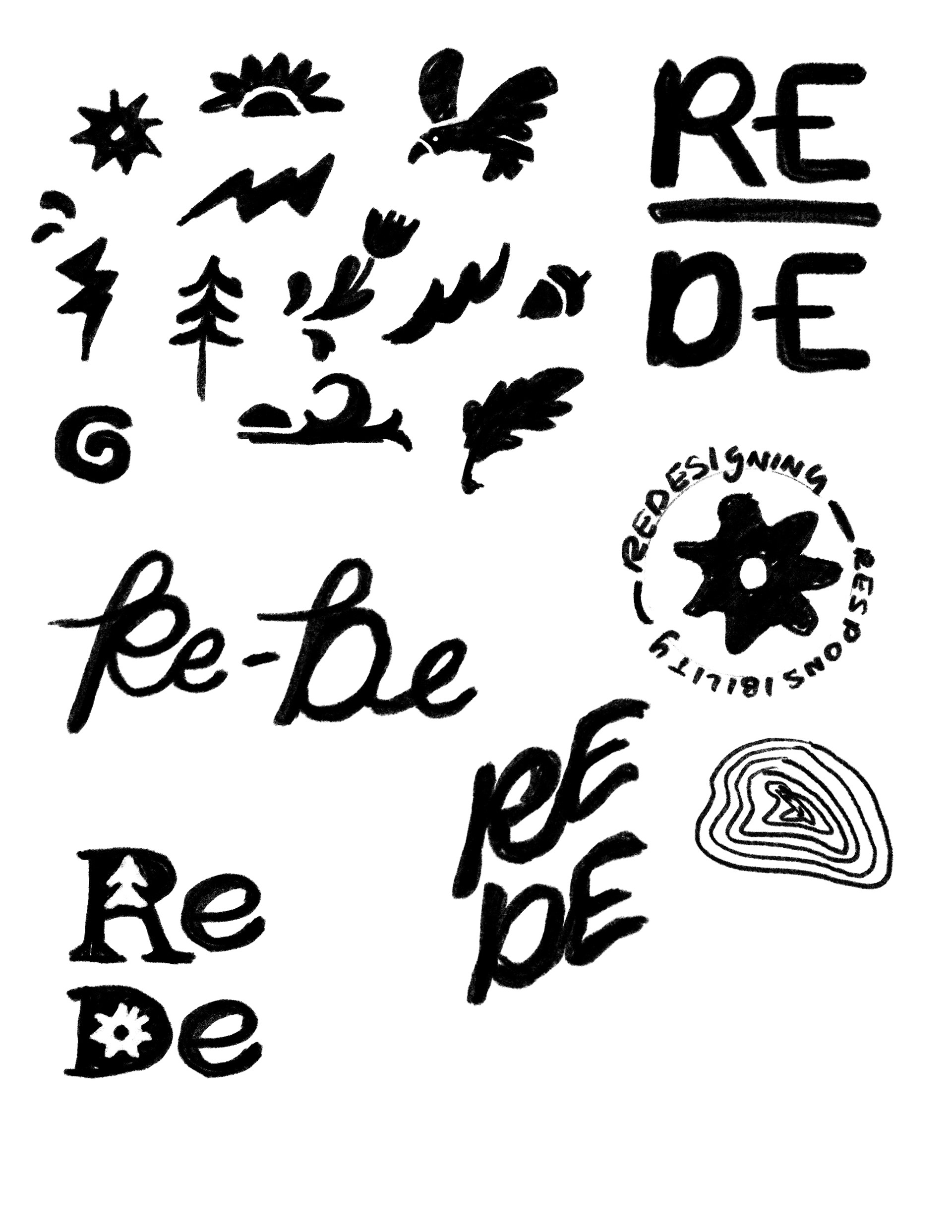
ReDesigning Responsibility: Branding
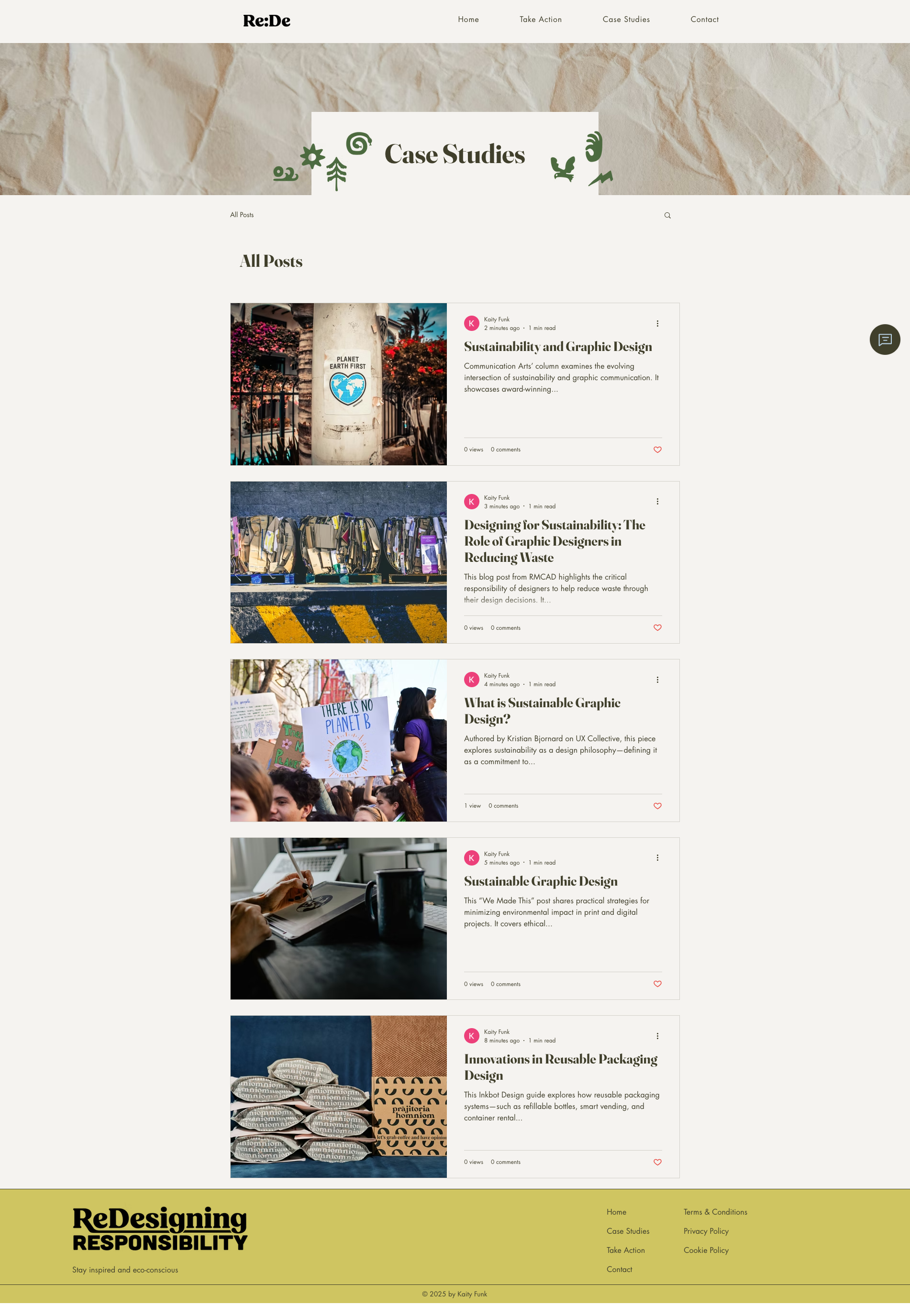
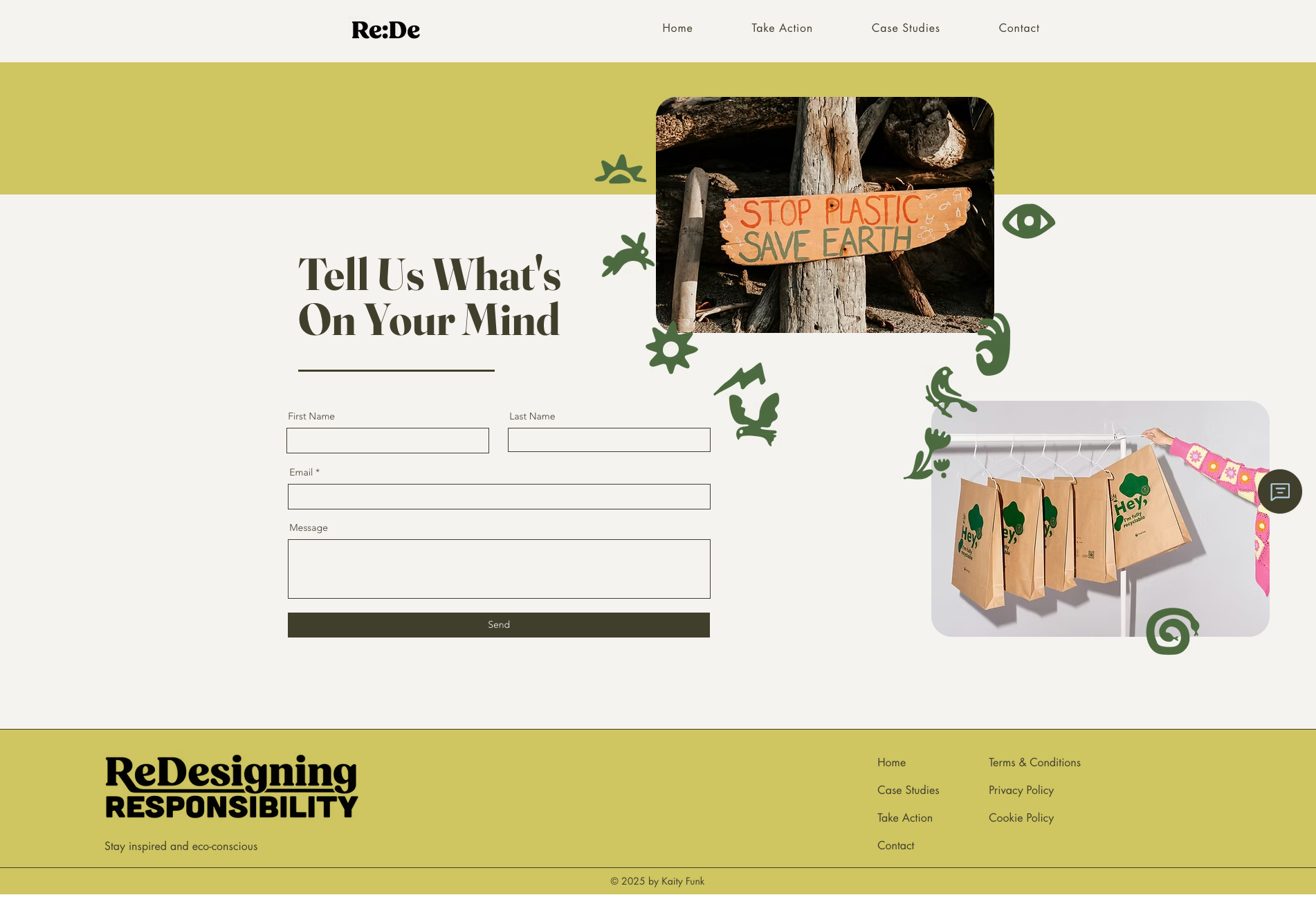
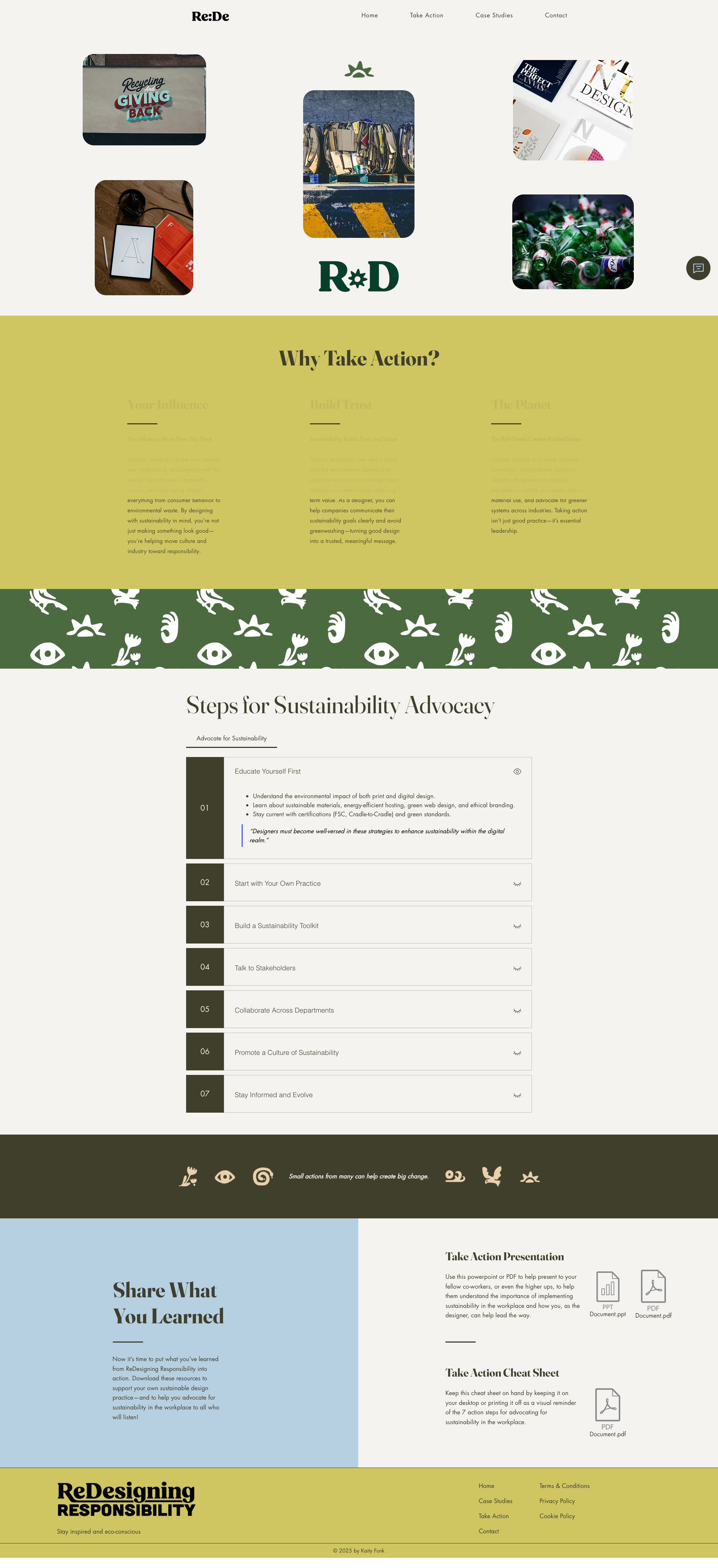
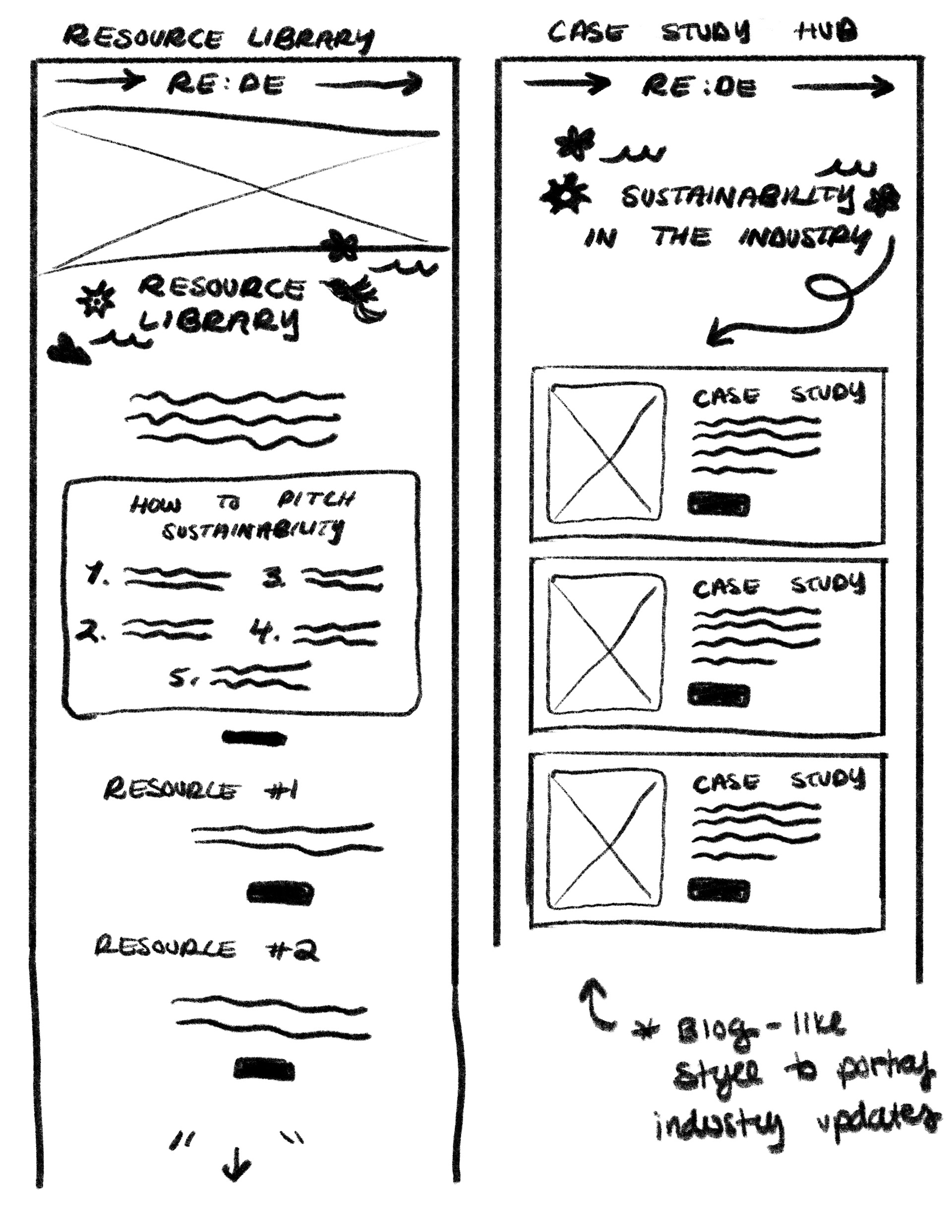
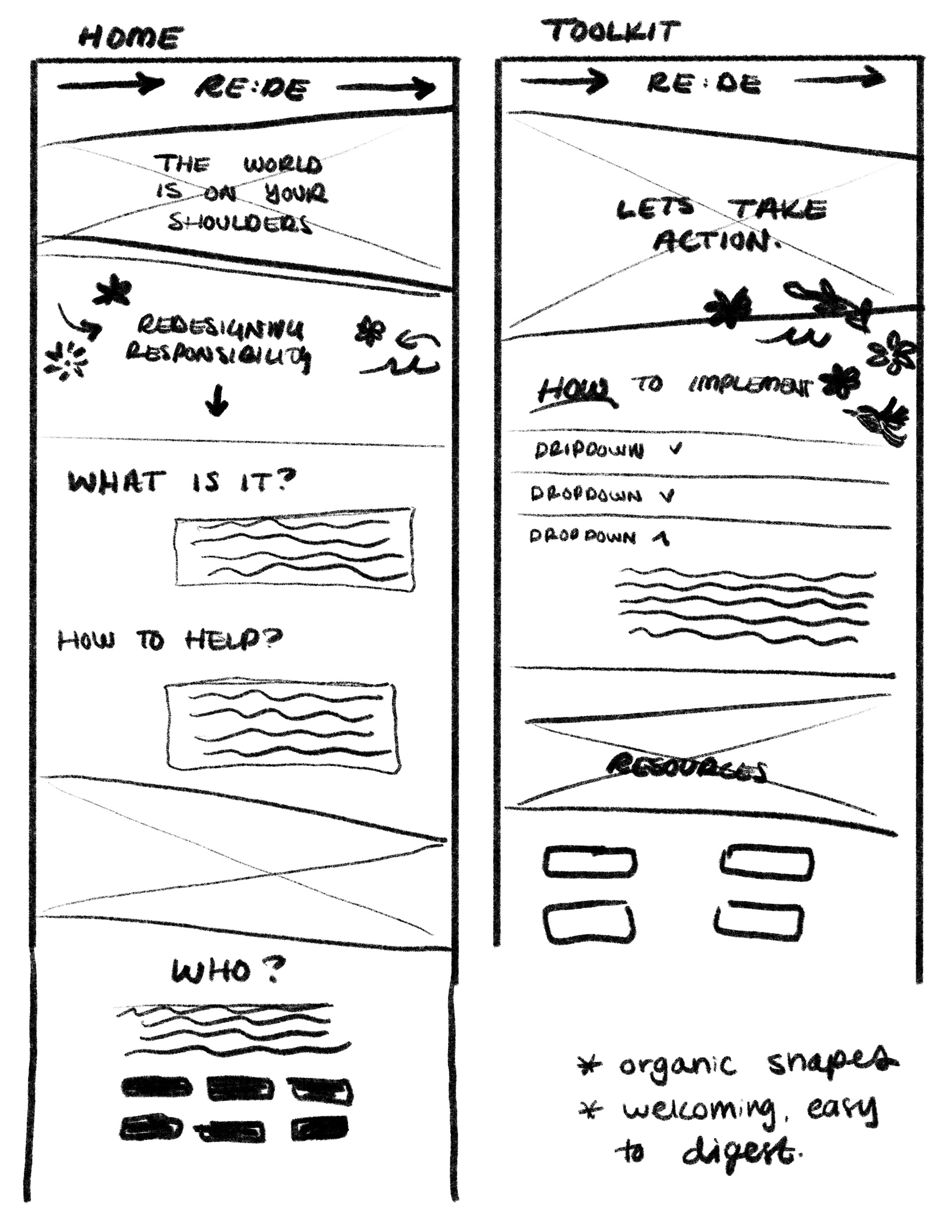
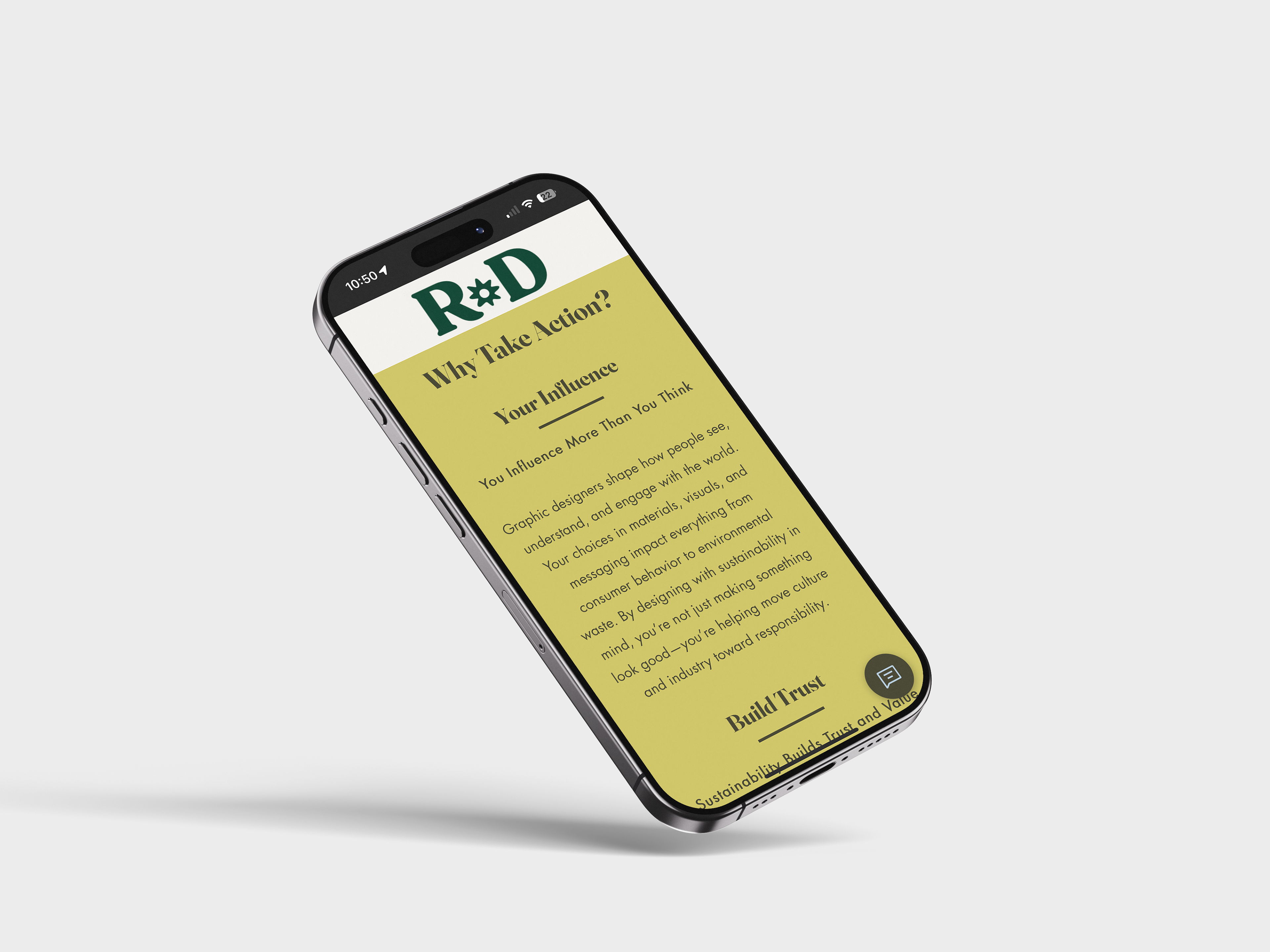
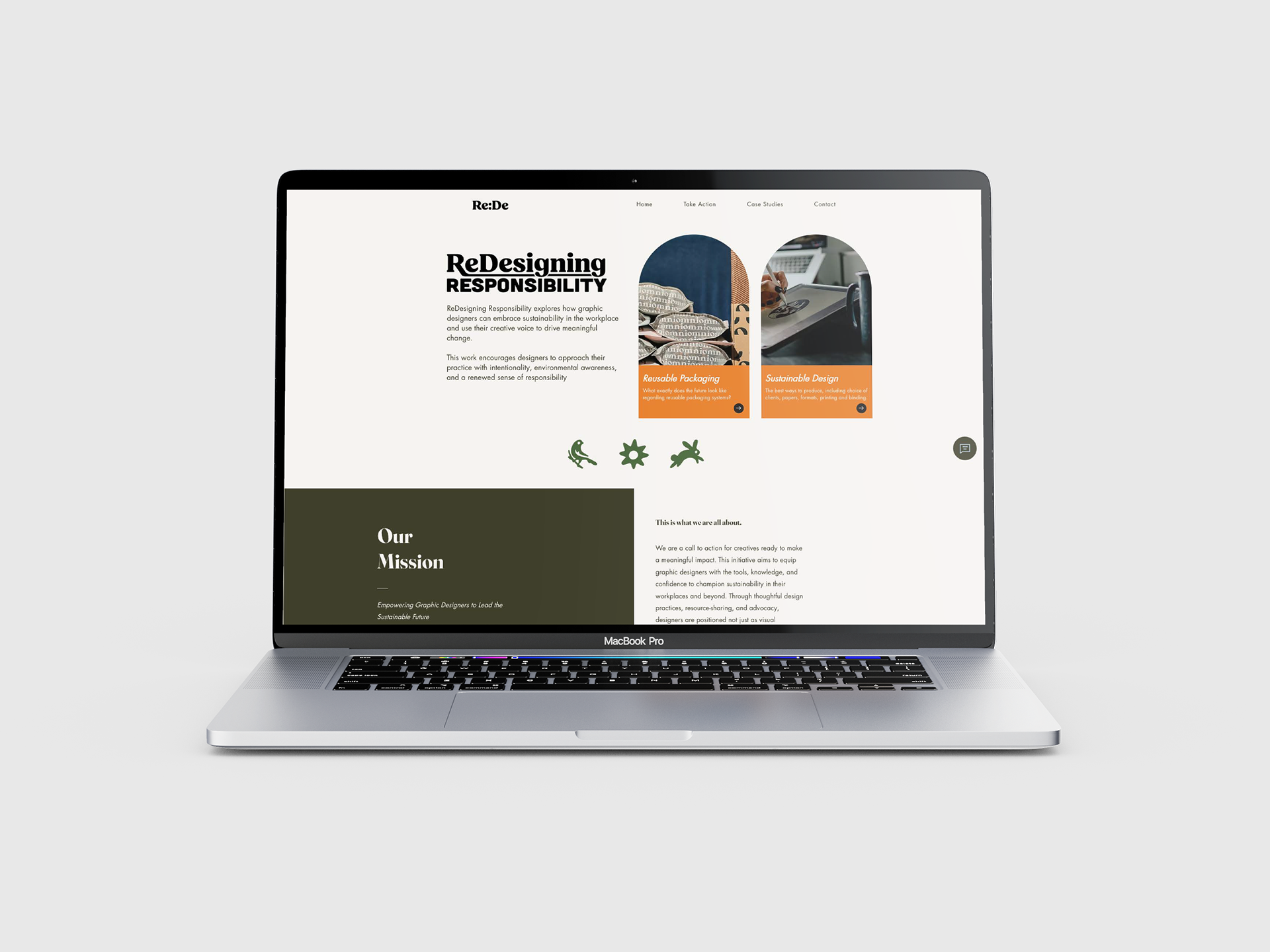
ReDesigning Responsibility: Website



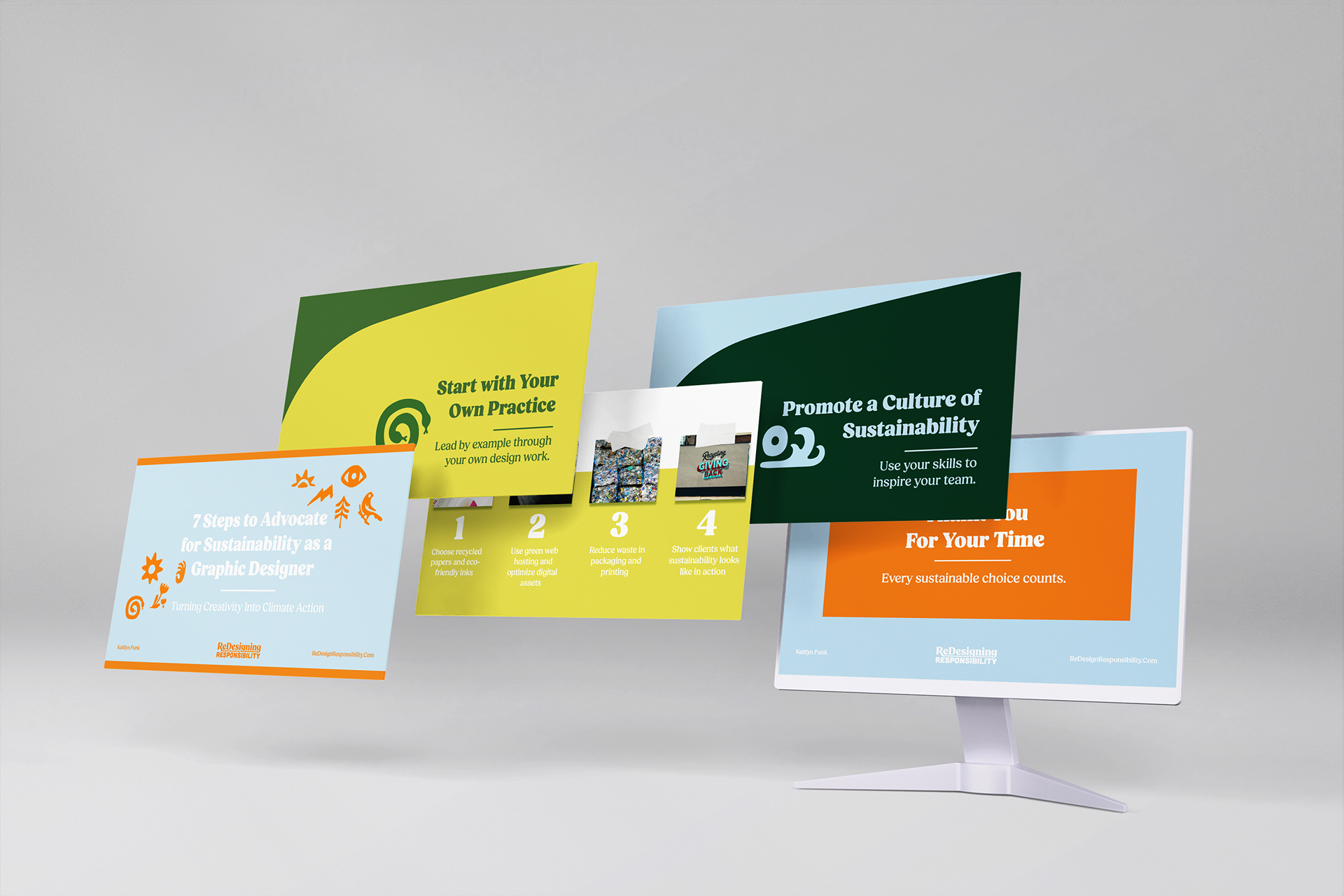
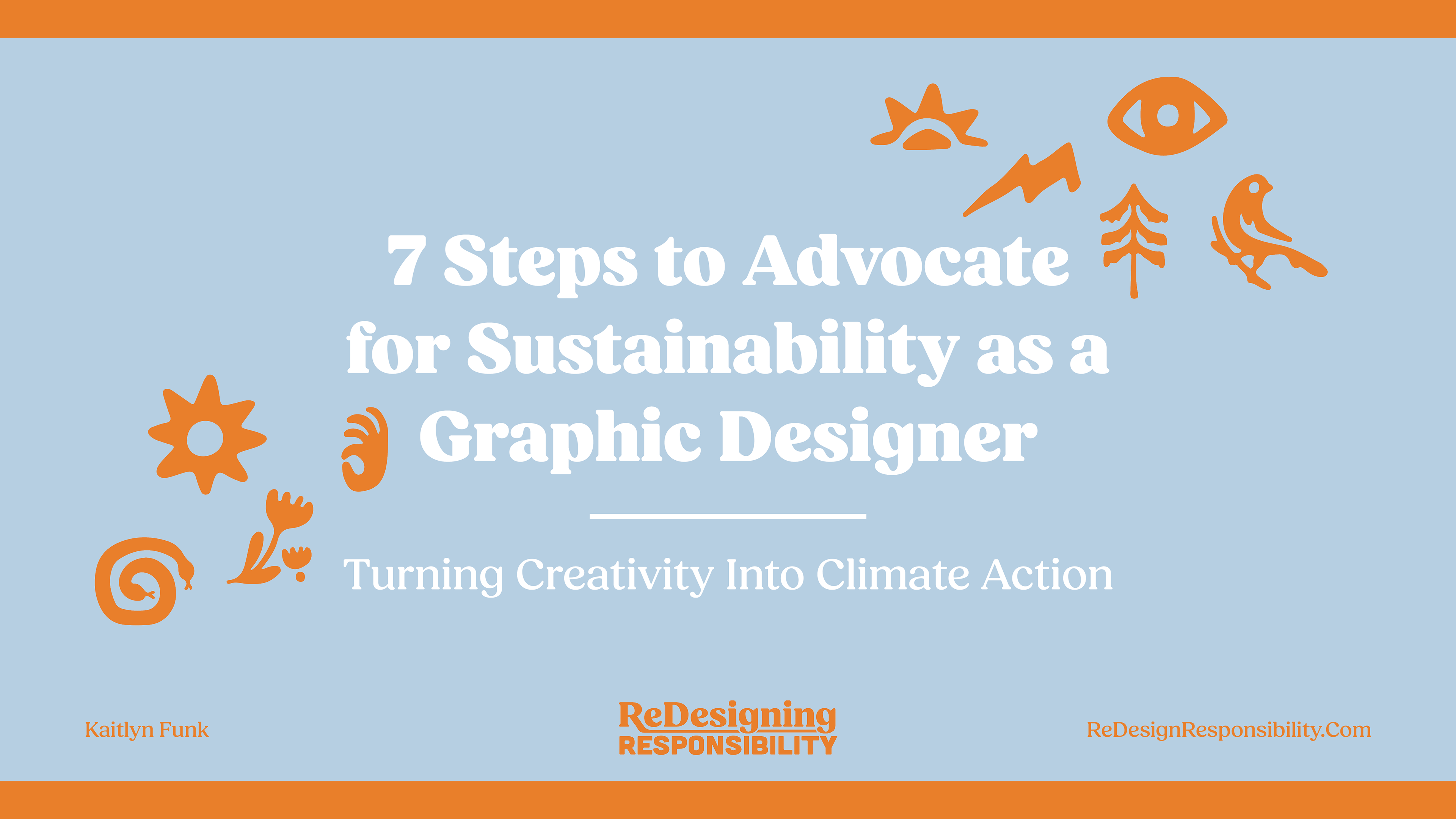
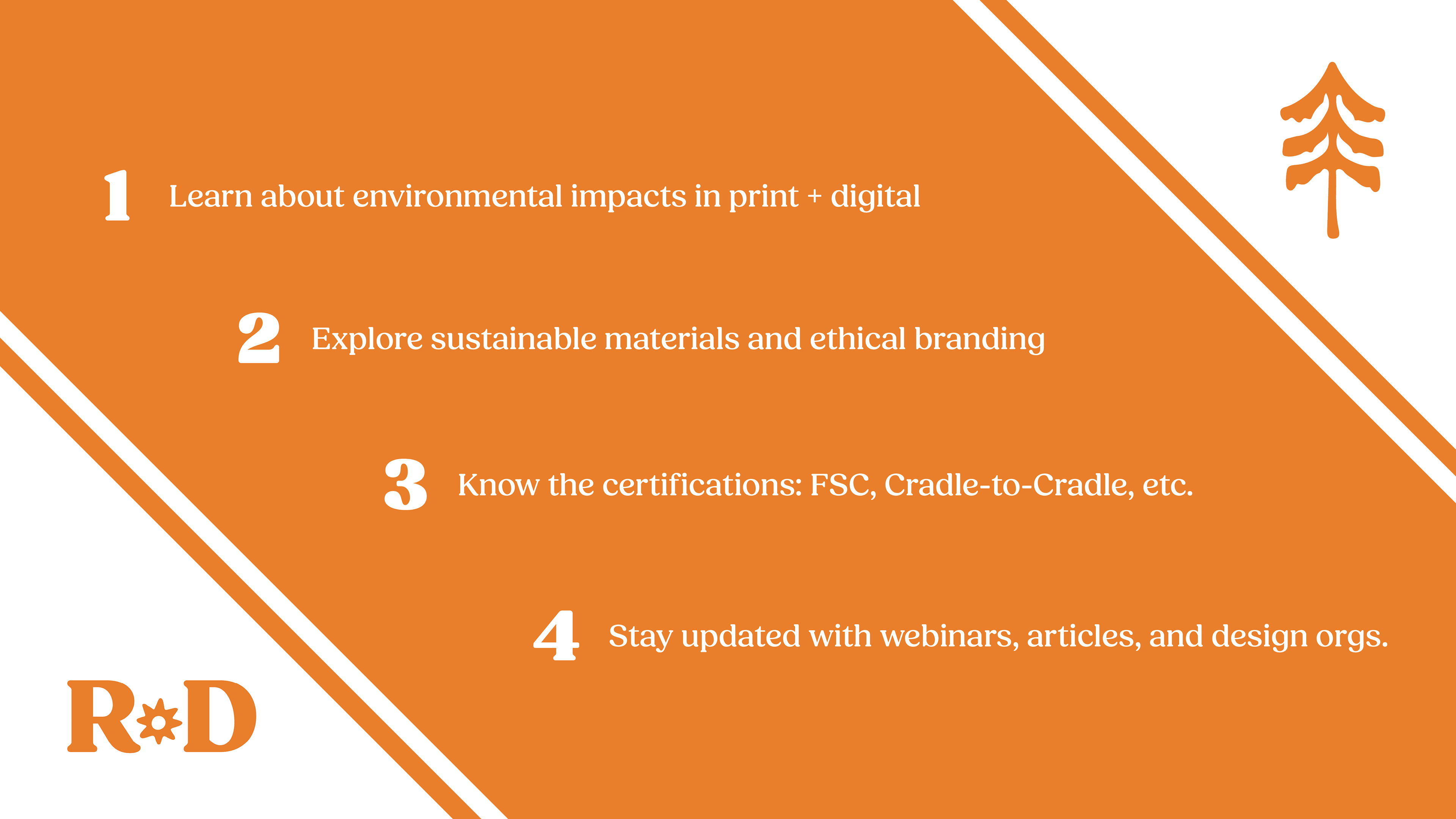
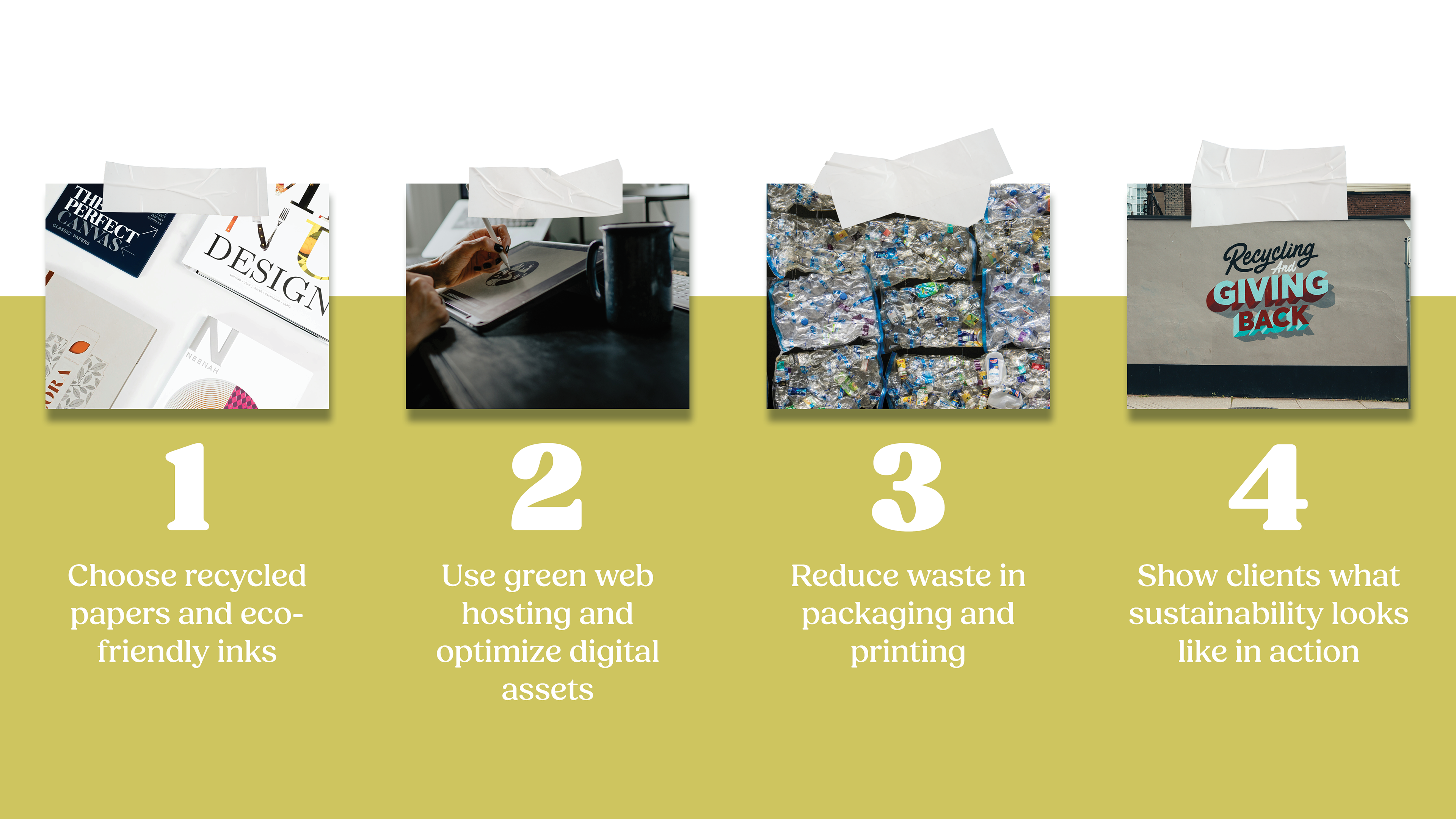
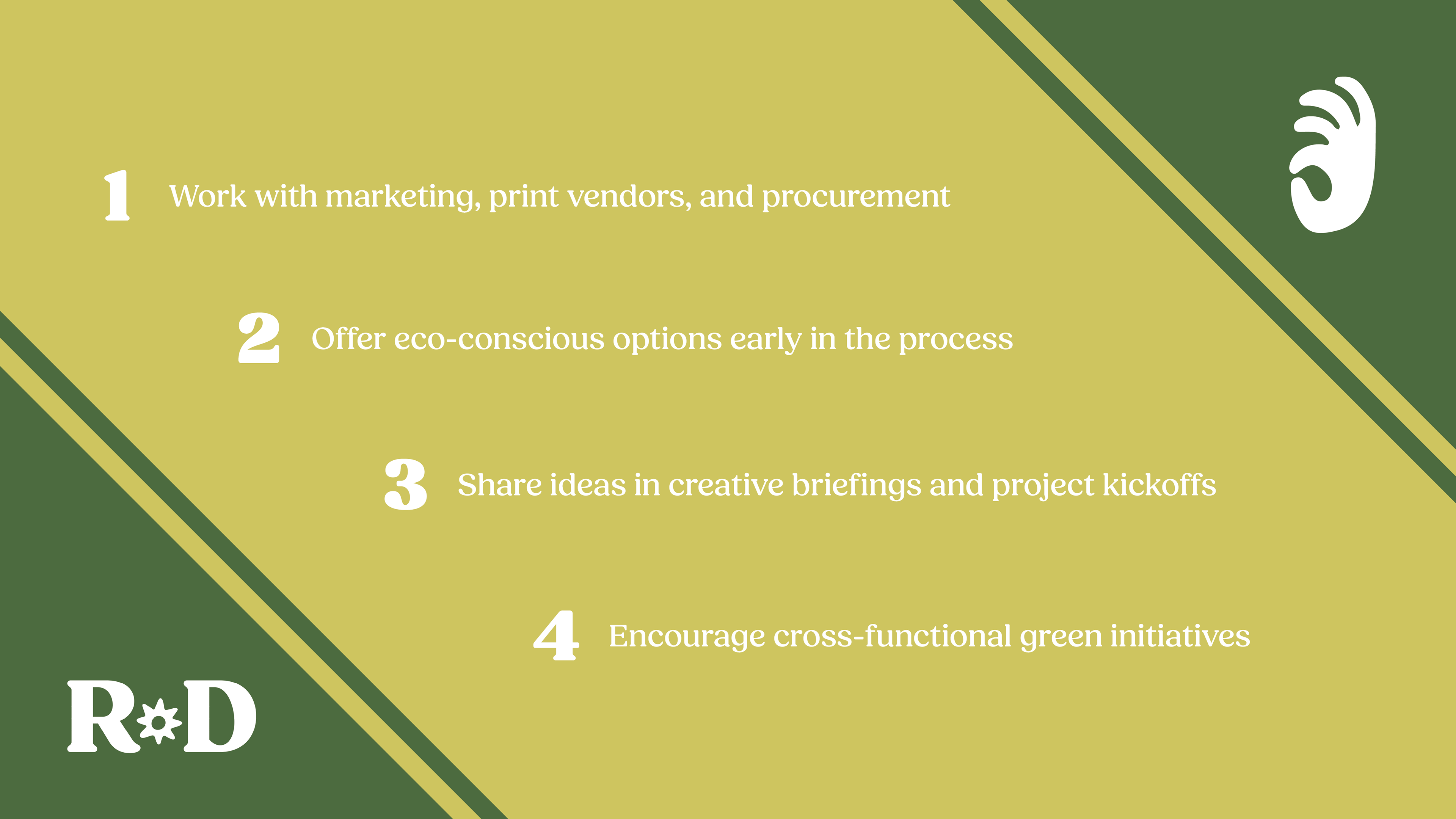
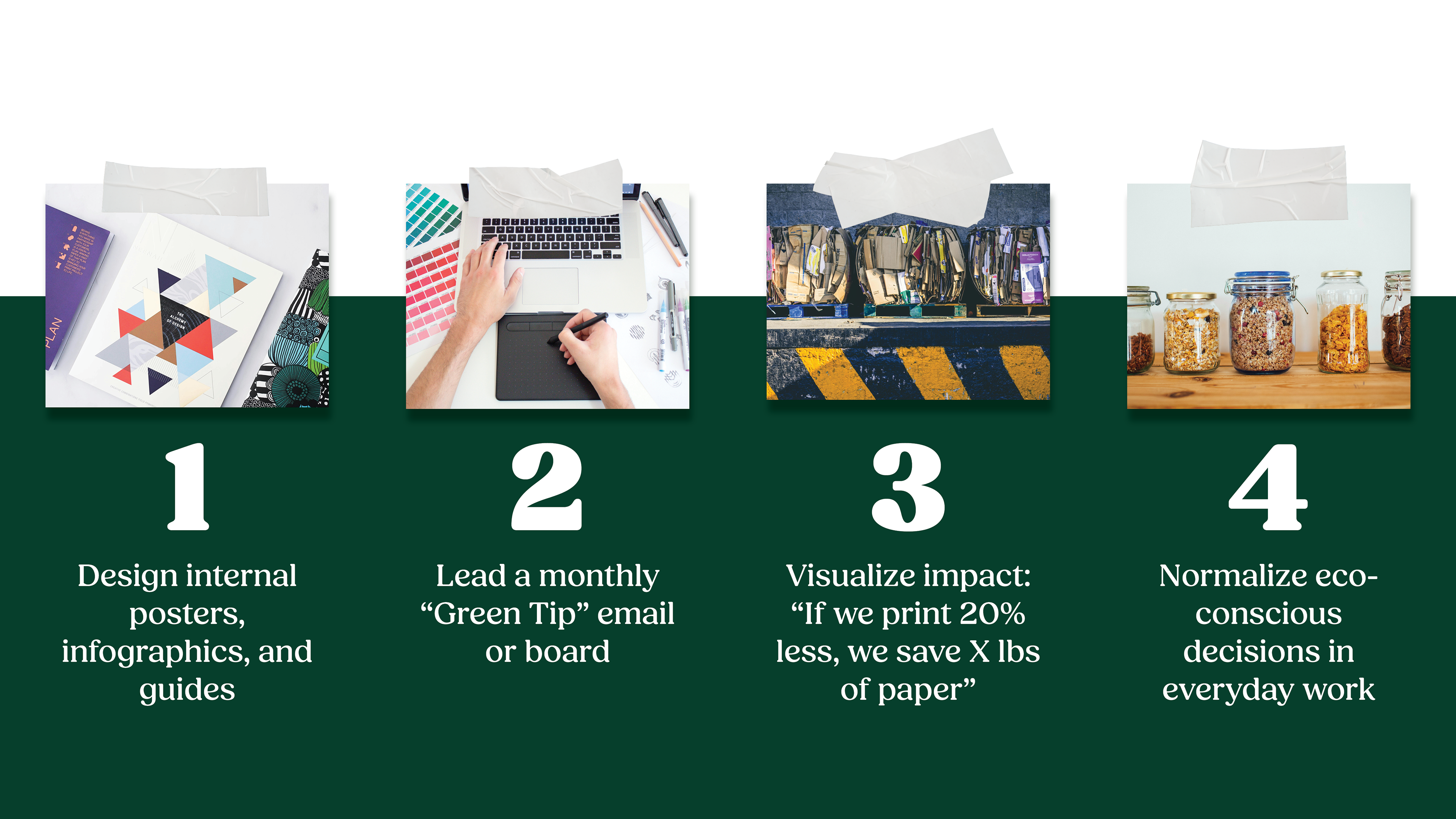
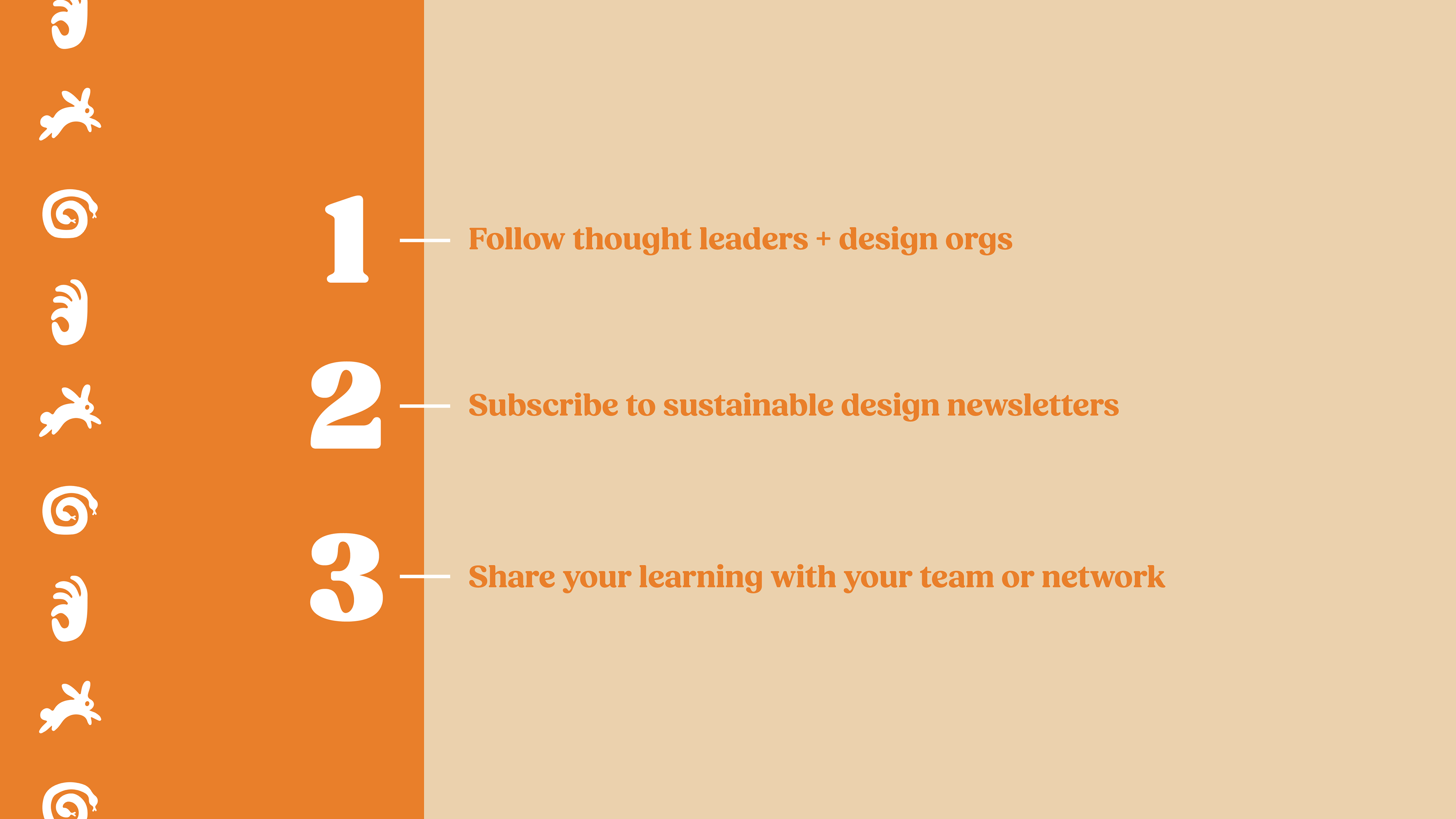
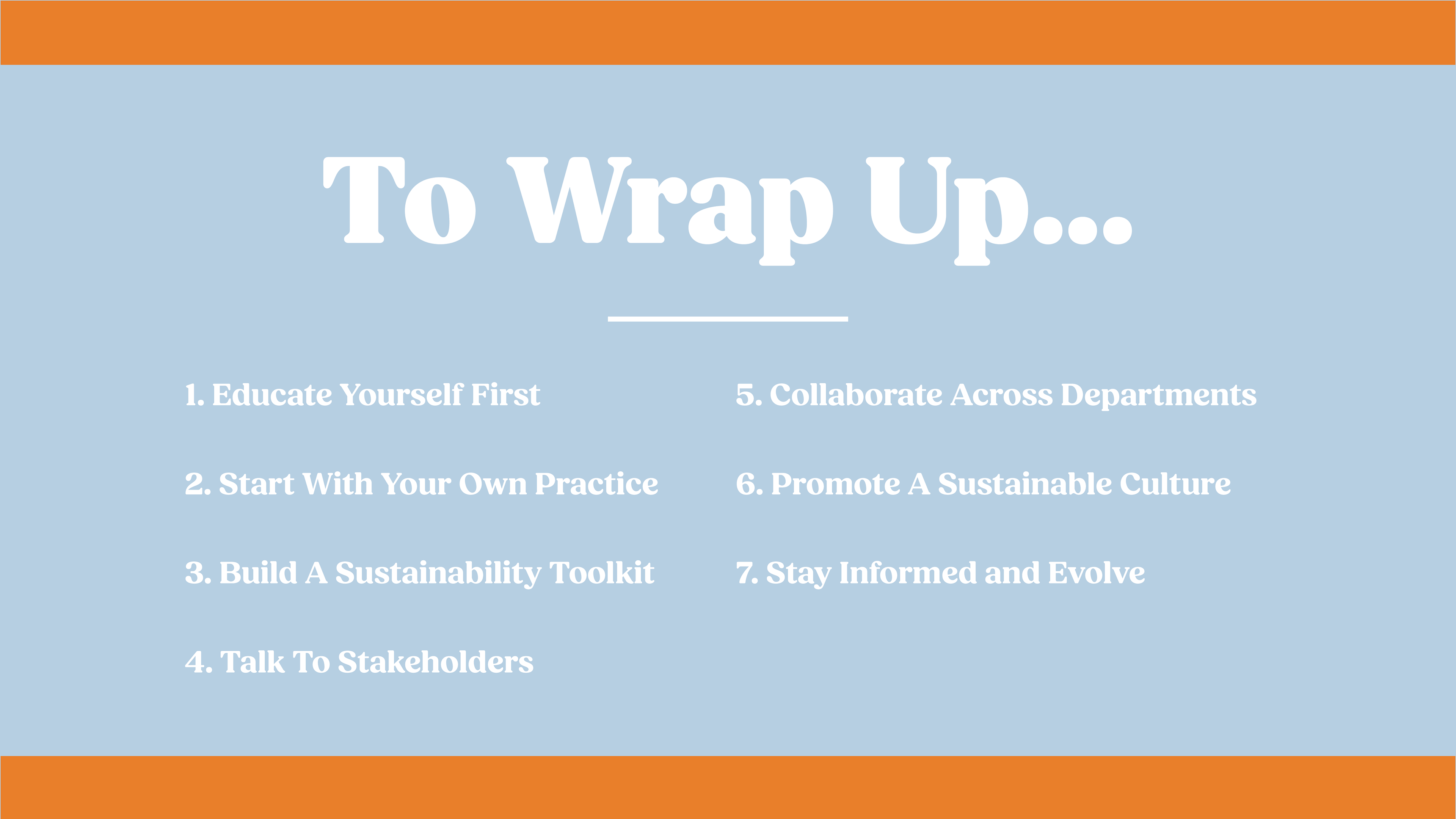
ReDesigning Responsibility: EDUCATIONAL PRESENTATION